EU Packaging and Packaging Waste Regulation (PPWR): What Indian Exporters Need to Know
Introduction
The European Union has introduced the Packaging and Packaging Waste Regulation (PPWR) (EU 2025/40), marking one of the most significant reforms in packaging legislation in recent decades. The regulation aims to reduce packaging waste, improve recyclability, increase the use of recycled materials, and accelerate the transition towards a circular economy. The PPWR entered into force on 11 February 2025 and will generally apply from 12 August 2026.
For Indian exporters supplying products to the European market, the PPWR represents both a compliance challenge and a business opportunity. Companies involved in wood products, paper products, handicrafts, furniture, consumer goods, food packaging, and e-commerce shipments should begin preparing now to ensure uninterrupted market access.
Why PPWR Matters
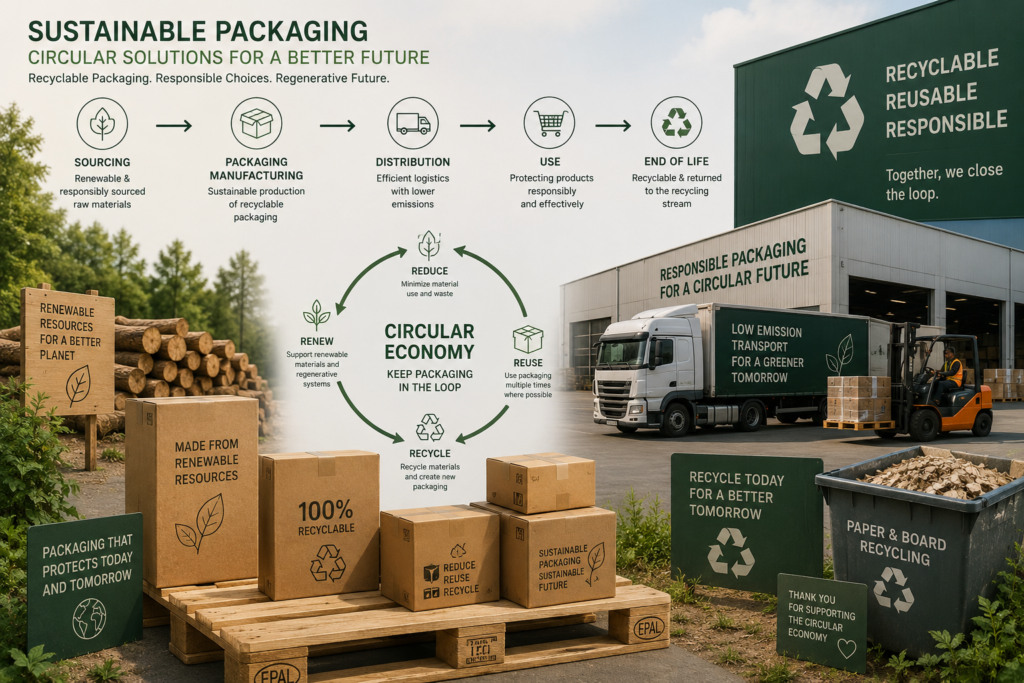
Packaging accounts for a significant share of resource consumption and waste generation in Europe. The EU has therefore moved from a directive-based framework to a directly applicable regulation that establishes harmonized requirements across all Member States. The objective is to ensure that packaging placed on the EU market is designed, manufactured, used, and managed in a sustainable manner throughout its lifecycle.
The regulation applies to all packaging materials, including:
- Paper and cardboard
- Wood packaging
- Plastic packaging
- Metal packaging
- Glass packaging
- Composite packaging
It also covers packaging used in business-to-business (B2B), business-to-consumer (B2C), transport, retail, and e-commerce activities.
Key Requirements Under PPWR
1. Packaging Minimization
Companies must ensure that packaging weight and volume are reduced to the minimum necessary while maintaining product protection and functionality. Excessive packaging and unnecessary empty space will be restricted under the regulation.
2. Recyclability Requirements
By 2030, all packaging placed on the EU market must be recyclable in an economically viable manner. Packaging design will increasingly be assessed based on its ability to be collected, sorted, and recycled effectively. Recyclability performance grades will also be introduced.
3. Increased Recycled Content
The regulation introduces mandatory recycled-content targets for certain plastic packaging categories. Manufacturers will need to demonstrate the use of recycled materials while maintaining product safety and performance.
4. Restrictions on Certain Single-Use Packaging
Several single-use packaging applications will face restrictions, particularly where reusable or refillable alternatives are practical. The EU seeks to reduce unnecessary packaging and promote reusable systems.
5. Labelling and Consumer Information
The PPWR introduces harmonized labelling requirements to help consumers correctly sort and dispose of packaging waste. Digital information systems, including QR-code-based solutions, are expected to play an increasing role in compliance.
6. Substance Restrictions
The regulation seeks to minimize the presence of hazardous substances in packaging and packaging components. Manufacturers will need to review raw materials, coatings, inks, adhesives, and additives to ensure compliance.
Implications for Indian Exporters
Wood and Wooden Handicraft Sector
Indian exporters of furniture, handicrafts, decorative items, and wooden products often rely on paper, cardboard, and plastic packaging for exports. Under PPWR, buyers may increasingly require evidence that packaging materials are recyclable, responsibly sourced, and optimized for material efficiency.
Paper and Packaging Industry
Paper-based packaging is expected to benefit from the EU’s circular economy ambitions. However, manufacturers must still demonstrate recyclability, material composition, and compliance with packaging design requirements.
E-commerce Exporters
Online sellers shipping products directly to European consumers should review packaging dimensions and filler materials. Future requirements related to packaging minimization and empty-space limitations may affect shipping practices and packaging design.
Supply Chain Documentation
European importers are increasingly requesting:
- Material declarations
- Recyclability assessments and verification report
- Chemical compliance statements
- Supplier sustainability documentation and verification
This trend is expected to accelerate as companies prepare for full PPWR implementation.
Recommended Actions for Businesses
To prepare for PPWR compliance, Indian manufacturers and exporters should:
- Conduct a packaging compliance assessment.
- Map all packaging materials used for EU-bound products.
- Review packaging design for recyclability and material efficiency.
- Integrate PPWR requirements into sustainability and export strategies.
PPWR and the Future of Sustainable Trade
The PPWR is more than a packaging regulation—it is a strategic component of the EU Green Deal and Circular Economy Action Plan. Companies that proactively redesign packaging, improve material traceability, and invest in sustainable solutions will be better positioned to maintain and expand their access to the European market.
For Indian exporters, early preparation can transform compliance from a regulatory burden into a competitive advantage. Organizations that align with PPWR requirements today will be better equipped to meet customer expectations, reduce environmental impacts, and strengthen their long-term presence in the European Union.
About GICIA India Pvt. Ltd.
GICIA India Pvt. Ltd., an accredited Product Certification Body under ISO/IEC 17065 by the National Accreditation Board for Certification Bodies (NABCB), is well-positioned to support manufacturers, exporters, packaging producers, and supply chain stakeholders in their PPWR compliance journey.
GICIA offers independent verification and assessment services for:
- Recycled content verification of packaging materials
- Supply chain traceability and due diligence assessments
- Packaging sustainability and compliance evaluations
- Responsible sourcing verification
- Carbon footprint and environmental performance assessments
- Training and capacity building on emerging regulatory requirements
In addition to PPWR-related services, GICIA is already in certification businesses related to EUDR, FSC®, PEFC, ESG, Carbon Footprint, and responsible supply chain management.
Through certification and verification services, GICIA India helps organizations build transparent, resilient, and compliant supply chains while strengthening their access to international markets.
As sustainability regulations continue to evolve across global markets, proactive compliance is becoming a business necessity. GICIA India remains committed to partnering with organizations to navigate these changes effectively and transform compliance requirements into competitive advantages.
Prepared by Dhananjay Kr. Dwivedi, CEO – GICIA India Pvt. Ltd.